I've tried every system and failed. What's different?
The CALM Method starts from where you actually are — not where a perfectly organized person thinks you should be. It works with your brain, your energy, and your real life. And it has rescue plans built in for the days when everything falls apart.
Do I have to read the whole book?
No. Chapter 4 matches you with one of four reading paths based on your situation. You can jump straight to the chapter that matters most right now.
Is this just for people with ADHD?
No. It's for anyone who feels overwhelmed by their home. It's ADHD-friendly throughout, but it works equally well for busy parents, professionals, caregivers, people in life transitions, and anyone who needs a system that survives real life.
What if I only have 15 minutes?
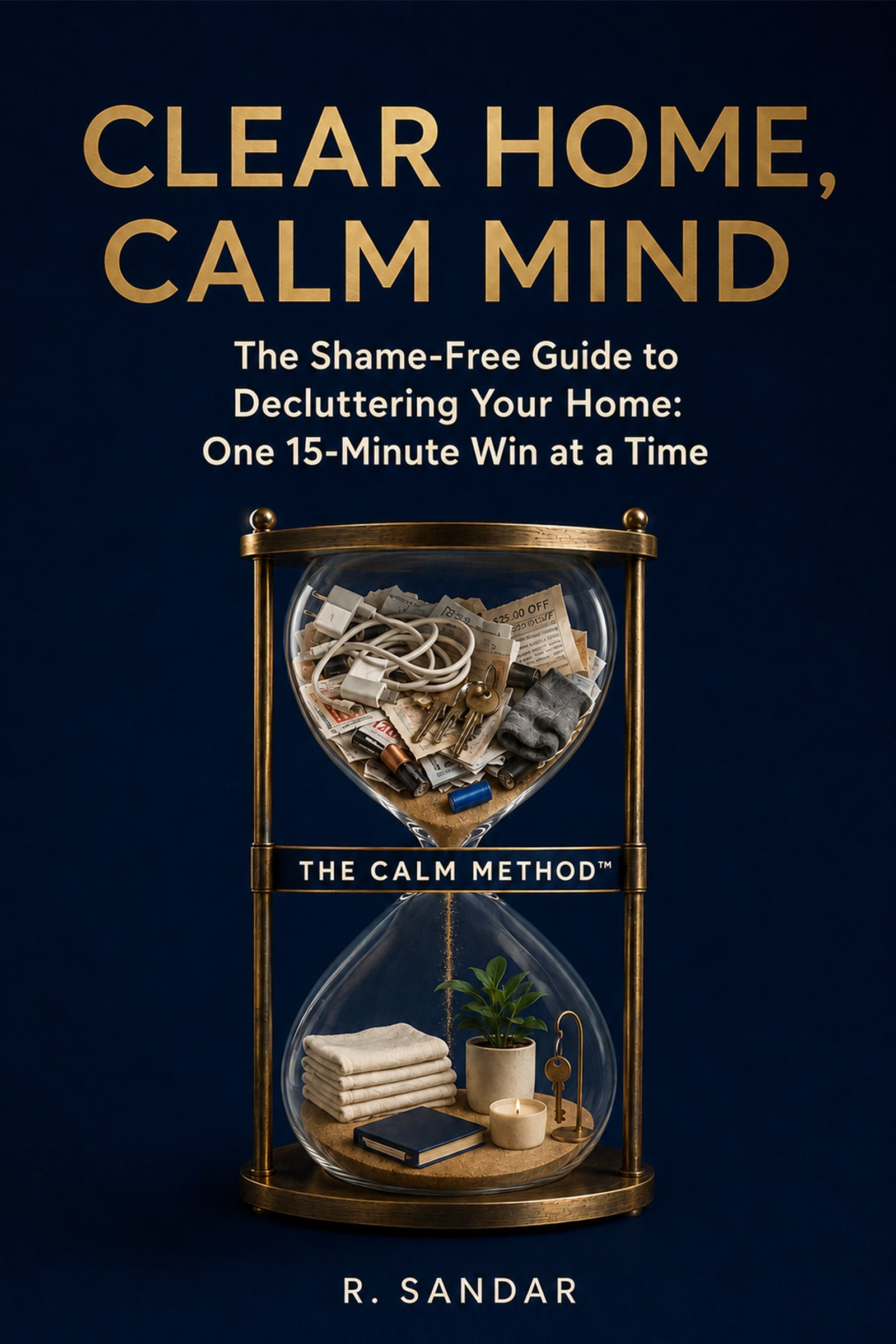
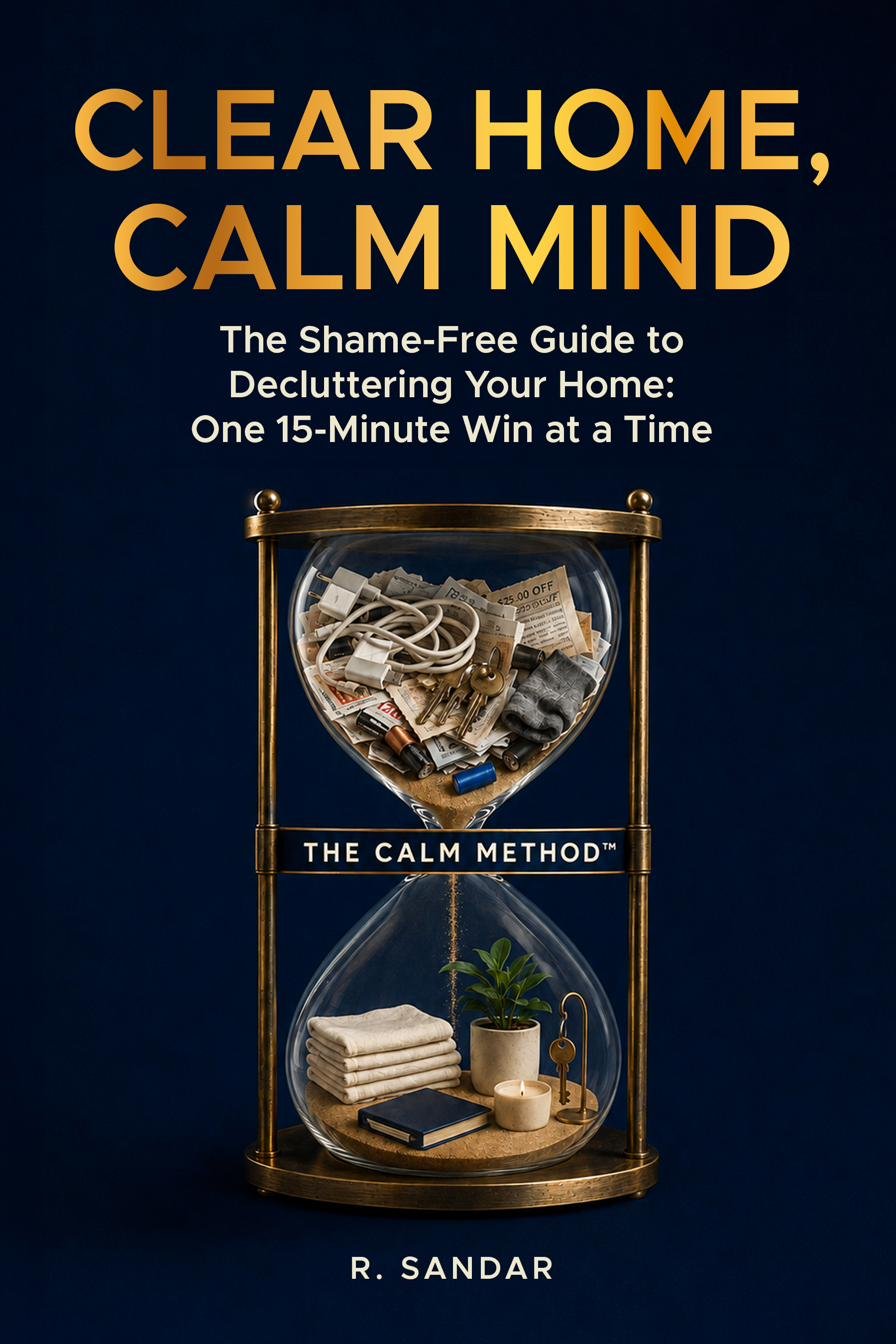
That's the whole point. The book is built around 15-minute sessions. Chapter 1 gives you your first win in that time. And on your worst days, the 5-Minute Rescue Plans have you covered.
What if my partner doesn't want to declutter?
Chapter 6 covers shared spaces and resistant household members. The short answer: start with your own spaces and let the results speak for themselves.