About R. Sandar
I'm not a professional organizer. Not a therapist. Not someone who grew up in a perfectly curated home.
I'm someone whose infant was hospitalized for five weeks while I was working full-time, finishing a degree, and barely sleeping. Whose home fell apart so completely that a heater fire broke out because exhaustion had won.
Traditional organizing advice was designed for someone with time and energy I didn't have. Every system assumed a baseline of functioning I couldn't reach. And every failure made the shame worse.
So I asked a different question: what if the problem isn't discipline? What if the problem is that every system was built for a version of life that doesn't exist for most of us?
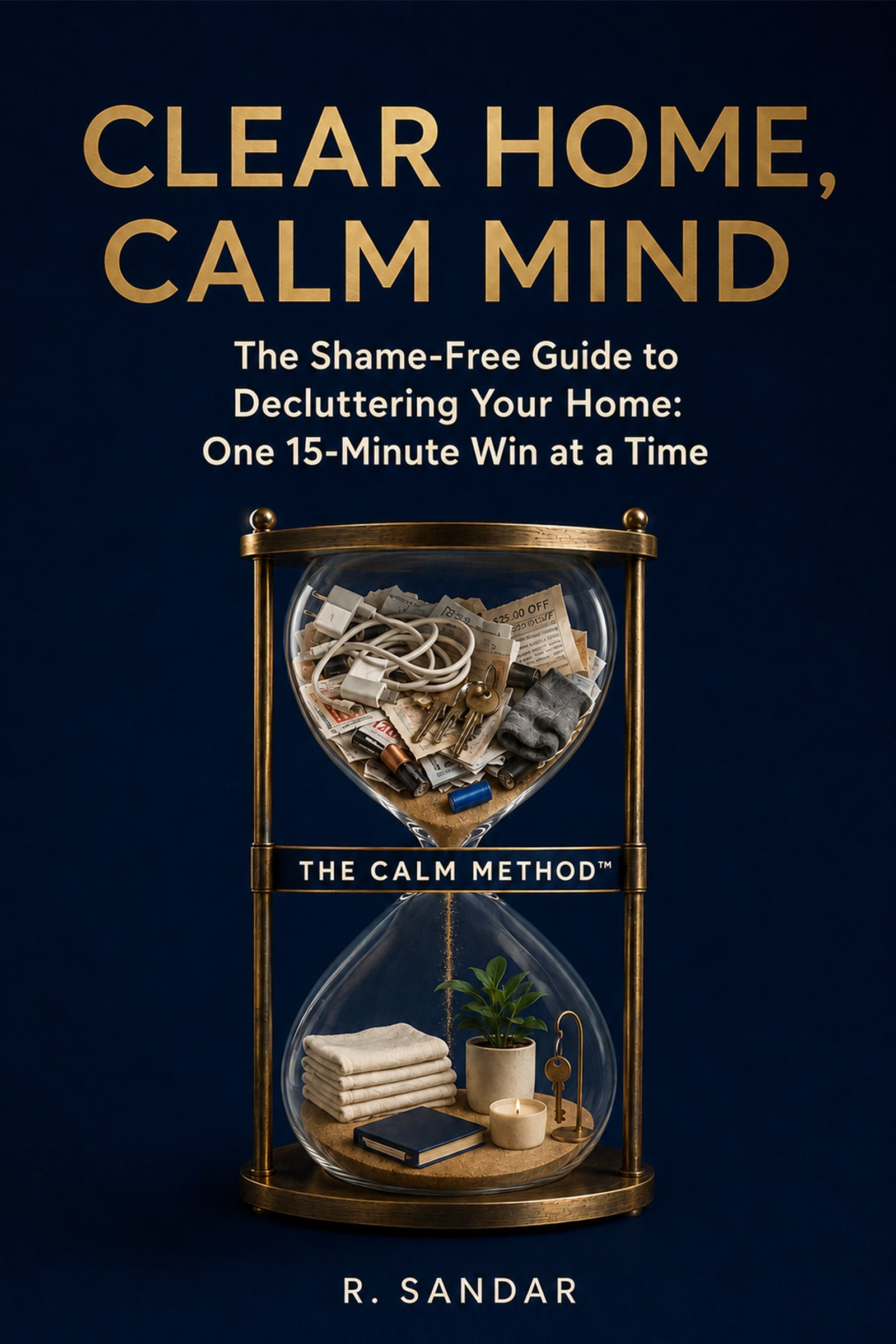
That question became the CALM Method. Not a system born in a laboratory or a design studio, but one that grew from managing ADHD and anxiety, from raising a child in a home that never quite stayed organized, from understanding that the gap between "I should clean this" and actually doing it isn't laziness. It's a brain wired differently, living in a world that doesn't come with instructions for people like us.
I live with my family and a junk drawer that gets cleared every Tuesday.
Usually.