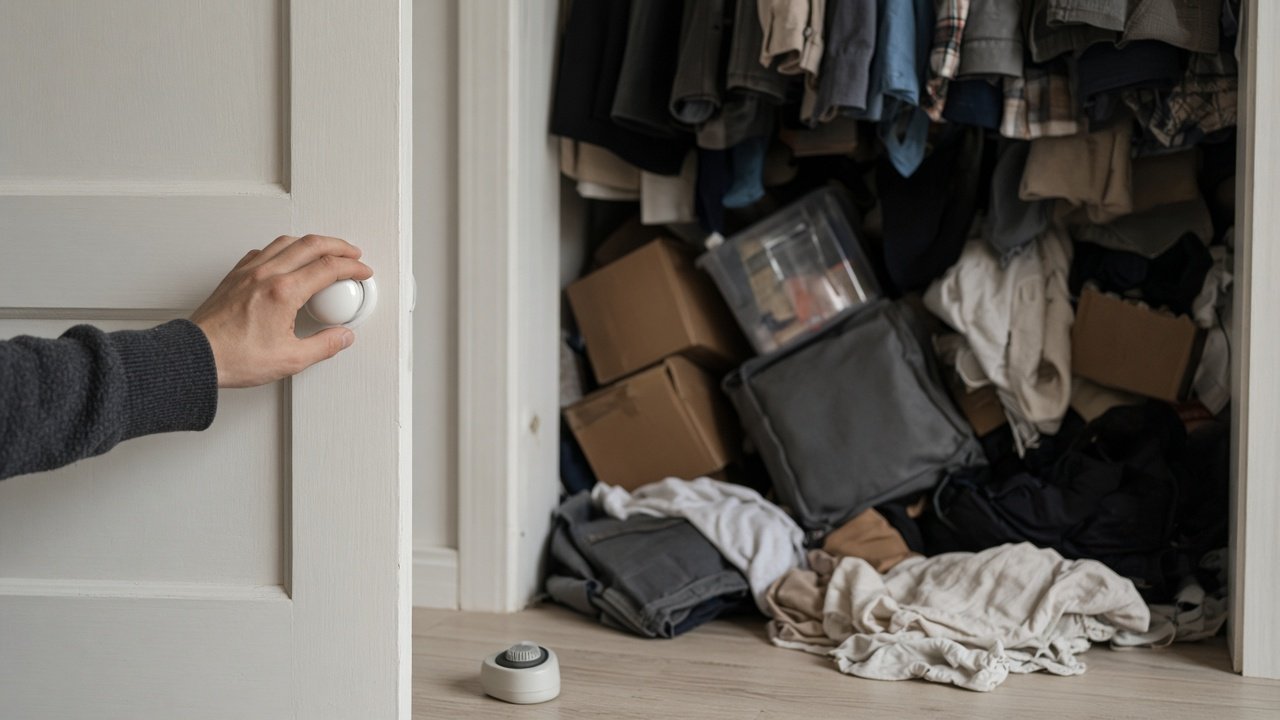
You open the closet door. Your heart speeds up. Your throat goes tight. You close the door again.
If that’s you, you’re not being dramatic. Decluttering anxiety is real, and it makes total sense. Every object is a tiny decision, and some of those decisions carry money, memories, guilt and fear all at once. Of course your body reacts.
The good news? You don’t have to make the anxiety go away before you start. You just have to make the starting small enough that your nervous system can handle it.
Why your brain slams the brakes
When you’re overwhelmed, the hard part usually isn’t the work. It’s the starting.
Your brain looks at a full room and does the math: This will take four hours I don’t have. So it shuts down. Freeze mode.
But tell your brain “just five minutes” or “just this one drawer,” and it goes, Okay. That I can do. Starting is what breaks the freeze. Once you’re moving, you might keep going. Or you might stop. Either way, you got unstuck.
First, calm your body
When the anxiety is loud, start with your body, not the clutter. This comes from the rescue plans in Chapter 3 of the book:
-
Sit down. Both feet on the floor. A hand on your chest.
-
Breathe. In for four counts, out for six. Do that three times.
-
Find one thing that’s already okay. The couch is here. You have a clean cup. The lamp is on. That’s something.
-
Say it out loud: “I don’t have to fix everything right now.”
That’s it. You can stop there and it still counts. Seriously.
Then, start with the easiest decisions
If you’re ready to touch something, pick one small surface and set a timer for 15 minutes. The timer is your safety rail. When it goes off, you stop, no matter what.
Then sort in this order: Trash, then Relocate, then Keep.
Trash goes first on purpose. A dried-out marker isn’t an emotional decision. Neither is an expired coupon. Those easy “yes, it goes” moments build a little momentum before you hit anything harder. And Relocate is just walking something back to the room it belongs in. No big feelings required.
Give the hard stuff a waiting room
What about the sentimental things that make your throat close up?
Put them in a “decide later” box. Your first win isn’t about tackling emotional items. It’s about proving to yourself that you can do something. The photos and the letters and the baby clothes will still be there when you’re ready. They can wait.
Perfect is what keeps you stuck
A lot of decluttering anxiety is really perfectionism wearing a disguise. If I can’t do it right, why start?
But perfect keeps you stuck. Perfect makes you feel like you’re behind when you’re actually making progress. Done imperfectly, in 15 minutes, beats not done at all.
If you didn’t finish when the timer rang? Great. The timer protected you from burning out. Finish tomorrow, or call it done.
Sarah went at her own pace
Sarah had four years of boxes from her divorce sitting in her spare room. Just thinking about them made her feel sick. When she finally started, she gave herself 15 minutes per box.
Some sessions, she flew through. Some sessions, she could only manage five minutes before the feelings got too big. So she stopped. And she came back the next day.
“I wasn’t racing a clock or meeting someone else’s standard,” she said. “I was just working through my stuff at a speed I could handle.”
After two weeks, every box was sorted.
It gets easier with practice
Here’s what I’ve seen again and again: “I felt anxious the whole time” is one of the most common things people say after their first 15-minute session. And my answer is always the same. Notice that you did it anyway.
Anxiety doesn’t have to stop you. And the more small wins you stack up, the less scary starting feels.
So if your chest gets tight when you open that closet, that’s okay. Close it if you need to. Breathe. Pick a smaller spot. Come back when you’re ready.
If anxiety is affecting your daily life in a big way, please talk to a doctor or therapist. You deserve real support, and a book or blog can’t replace it.
The gentle, timer-based approach in Clear Home, Calm Mind was built for anxious, overwhelmed brains. Find it at rsandar.com/book, and get the free CALM Starter Kit through the newsletter.
Related reading: Why You Feel Guilty Getting Rid of Things (and How to Let Go Gently) · Too Tired to Clean? Five Minutes Is Enough Tonight